
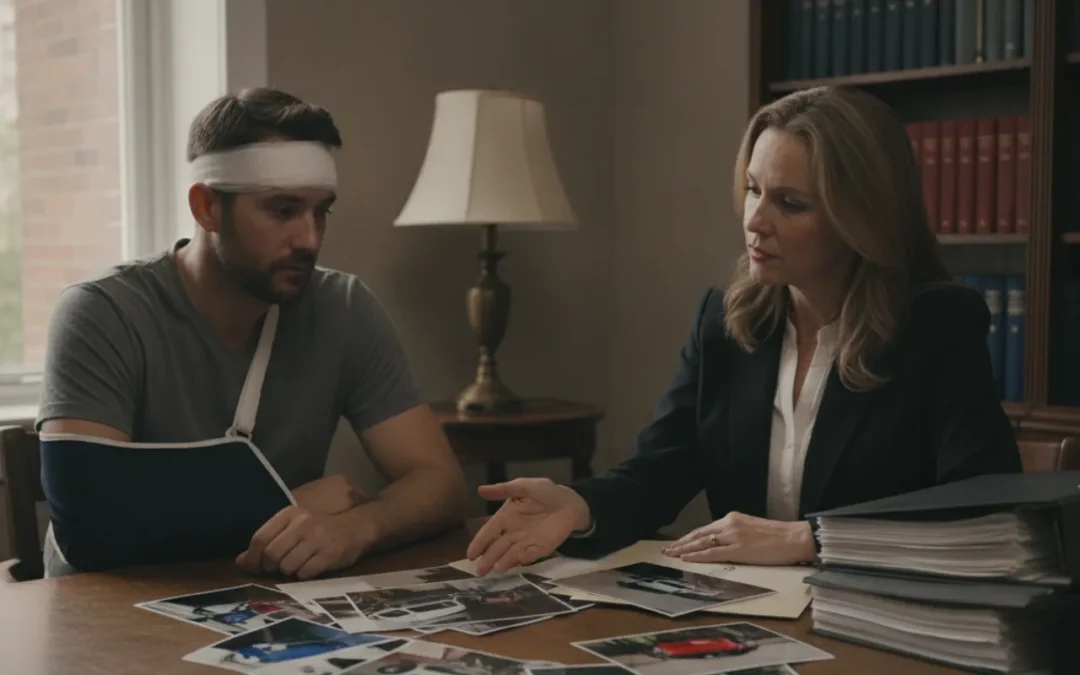
If you are trying to hire a car accident attorney after the other driver disputes fault, start with two priorities: take care of your health and preserve what you know. You do not have to prove the entire case before asking for a review. A calm, organized account of what happened, paired with available records, can help an attorney understand what questions need further attention.
Request a free case evaluation
Why does disputed fault change the decision?
After a crash, drivers may give different descriptions of the same moments. One person may say a vehicle entered an intersection on green; another may remember a turn, lane change, or sudden stop. An insurer may review available evidence before deciding how to handle a claim. A disagreement alone does not establish who is legally responsible, and an initial opinion is not the same as a full review of all the facts.
That uncertainty is one reason to consider speaking with an attorney when you were hurt, the accounts conflict, or an insurer is asking you to make decisions before you understand the request. A lawyer can discuss what information may matter, what records to preserve, and whether the firm may be able to help. No initial conversation can guarantee representation or a particular outcome.
For related context, read about who may be liable after a Kentucky car crash and how fault may be evaluated. Those subjects overlap with disputed-fault cases, but the immediate task here is practical: prepare a clear record and choose counsel thoughtfully.
When should you consider hiring an attorney?
There is no single point that fits every collision. Consider getting legal guidance promptly when one or more of these circumstances applies:
- The other driver denies responsibility. Conflicting accounts can make contemporaneous photos, witness information, and consistent records especially useful to review.
- You were injured or symptoms are changing. Medical care comes first. Seek medical attention immediately for your injuries. Keep appointments and retain visit summaries when available.
- An insurer wants a recorded statement or broad records. Make sure you understand who is asking, what is requested, and why before agreeing. If uncertain, ask for time to get advice.
- You received an offer or release. Read what it resolves and what rights it may affect. Do not sign a release unless you understand its terms.
- Evidence could be lost or changed. Nearby camera footage may not be retained for long, and vehicle damage or memories can change over time.
- The claim is hard to manage while you recover. A trusted family member can help sort papers and arrange a conversation if you are not up to handling calls.
You can also review this guide to when to get an attorney after a car accident. It covers broader reasons to seek help; this article focuses on choosing and preparing for counsel when fault is contested.
What should you gather before contacting a lawyer?
You do not need a complete case file. Bring what is already available, and make a short list of missing items. Do not delay medical care or put yourself in danger to collect evidence. This checklist helps organize a first conversation:
| Record or detail | Examples | How it may help the review |
|---|---|---|
| Crash identification | Date, approximate time, location, report number, exchange-of-information sheet | Gives a starting point for locating the event and related records. |
| Scene and vehicle evidence | Original photos of vehicle positions, damage, signs, signals, road conditions, and debris | Documents what was visible before the scene or vehicles changed. |
| Witness information | Names, contact details, where each person stood or sat, and what they said they saw | Helps distinguish independent observations from the drivers’ accounts. |
| Medical and work information | Visit summaries, bills, prescriptions, work dates missed, and wage records you already have | Tracks care and practical effects without requiring you to estimate future losses. |
| Insurance communications | Claim numbers, adjuster details, letters, emails, texts, requests, and offers | Shows what has been asked, discussed, or proposed and when. |
Make a simple timeline while events are fresh. Record what you personally remember, using approximate times if necessary, and label estimates as estimates. Keep separate notes for what another person told you. Avoid filling gaps with assumptions. If you notice that a detail in an earlier account was mistaken, do not quietly rewrite it; note the correction and when you realized it.
How can you preserve evidence when fault is disputed?
Keep the original photos and clips
Save scene photos, vehicle pictures, dash-camera recordings, and relevant messages in their original form. Back them up somewhere secure. Do not crop, filter, annotate, or delete the original files; if you make a copy with notes, retain the unaltered version too. Write down who took each image and roughly when, if known.
Photographs may show context beyond the impact point. A wide view can capture lane markings, nearby signs, traffic signals, weather, sightlines, and the location of vehicles. Close views can document damage. Do not return to a hazardous roadway to take pictures. If a nearby business, residence, or vehicle camera may have recorded the collision, note its location and the approximate time promptly. You may not control the camera owner’s retention schedule.
Make a neutral, detailed account
Write what you remember in your own words. Include where you were traveling, direction, lane, traffic conditions, and the sequence just before and after impact. If you cannot recall a detail, say so. A useful account is not the most forceful version; it is the clearest one you can honestly provide. Avoid comparing notes with others to make accounts match.
A quick sketch can help explain positions when words feel confusing. Mark the road direction, lanes, traffic controls, and approximate vehicle positions, then label uncertain parts. Do not present a rough sketch as a precise scale drawing. Keep it with your notes and explain that it is your recollection.
Follow up on witnesses without coaching them
Write down each witness’s name and contact details if available, where the person was, and how you learned what they observed. Do not tell a witness what to say or ask them to adopt your version. If you did not get their information, note the place they were standing and whether another person may know who they are. An attorney can discuss appropriate next steps for locating or contacting witnesses.
Organize the insurer record
Keep letters, emails, texts, claim references, and envelopes showing dates. After a phone call, note the date, the caller’s name and role, the number used, and a brief neutral summary. Keep the original communication rather than relying only on memory. If you do not know an answer during a call, do not guess; ask what information is needed and whether you can respond after checking your records.
For more about the process, read how to handle an auto insurance claim after a Kentucky crash. A practical record can also help you spot what remains unanswered, rather than treating every request as a reason to rush.
Keep medical information accurate
Tell medical providers about your symptoms and follow their instructions. Keep appointment summaries, prescriptions, and receipts as they become available. Do not minimize symptoms to an insurer or exaggerate them in your notes. If symptoms change, record when you noticed the change and discuss it with a provider. Medical records are not a substitute for your own memory, and your notes are not a substitute for medical advice. Safety comes before documentation. The National Highway Traffic Safety Administration provides public information about traffic safety; follow emergency responders and medical professionals when you need immediate help rather than trying to gather evidence at the scene.
How can you compare attorneys for a disputed-fault case?
Choosing counsel is not only about asking whether the office handles car crashes. You should understand who will work on your matter, how information will be handled, what the next steps might be, and how fees and costs are explained. The table below is a conversation guide, not a scorecard. Answers should be specific enough for you to understand the process, without requiring anyone to promise a result.
| Topic | Useful question | What a clear answer should explain |
|---|---|---|
| Investigation | How do you approach a crash where the drivers disagree? | What facts and records may be reviewed and how uncertainties are handled. |
| Communication | Who is my main contact, and how do I reach the attorney? | Who responds to routine questions and how urgent issues are escalated. |
| Evidence | What should I preserve or request now? | Practical steps tied to the records available in your situation. |
| Fees and costs | How does the fee arrangement work, and could costs be my responsibility? | The written agreement, attorney fee terms, and treatment of case or court costs. |
| Next steps | What happens if you agree to represent me? | What documents are needed, who handles follow-up, and how decisions are discussed. |
Ask for explanations in plain language. You can request time to read an agreement and ask about terms you do not understand. Do not feel that you need to choose an attorney during the first phone call. You can compare your comfort with the communication approach, how carefully your questions are answered, and whether the proposed next steps make sense to you.
What happens in a case evaluation?
A case evaluation is a chance to explain the collision and ask questions. You might begin with the date and place, then describe the disagreement: what the other driver says, what you remember, and what sources might help clarify it. Mention injuries and treatment to date, but do not try to forecast the final course of care. If you have a report, photos, or insurer letters, ask how the firm would like to receive them.
Prepare a short list rather than trying to memorize every detail. For example, write: “The other driver says I changed lanes; I remember staying in my lane. A passenger saw the impact, and I have two photos of the vehicles after they stopped.” That gives a starting point while clearly separating your memory from other evidence. If you are unsure about a fact, say so instead of guessing.
Rick Hessig is an attorney and Licensed Professional Private Investigator, and his investigative background informs case development. Rick Hessig Law serves car accident victims in Louisville and Kentuckiana, including Southern Indiana. The firm offers a free, no-obligation case evaluation. Its contingency-fee approach is described as “No Fee Unless You Win,” with no upfront attorney fee. In accordance with KBA regulations, case and court costs may be the responsibility of the client.
Learn more about car accident cases and Kentucky car accident claims. These pages offer general context, not a decision about your specific facts.
What should you avoid while choosing representation?
- Do not postpone medical attention to build a claim file or call an attorney first. Seek medical attention immediately for your injuries.
- Do not speculate about fault in messages or public posts. Keep statements factual and avoid arguing online.
- Do not delete potentially relevant records. Preserve photos, messages, and insurer communications, even if they seem incomplete.
- Do not assume a first insurance explanation is the final word. Ask what the position is based on and keep a copy of the communication.
- Do not sign a release you do not understand. Ask questions and get advice before agreeing to terms that may resolve claims.
- Verify who is contacting you before sharing sensitive personal or financial information.
- Do not alter the story to make it sound stronger. Consistency comes from accuracy, not from filling memory gaps.
These are practical precautions, not legal advice about your particular facts. If you are in immediate danger or need urgent medical care, address that first.
Frequently asked questions
Can I contact an attorney if the police report does not identify who caused the crash?
Yes. A report can be one source of information, but a conversation can also address other records, photographs, witness details, and unresolved questions. Bring the report if you have it and explain what you believe remains disputed.
Should I wait until treatment is complete before requesting an evaluation?
You can ask for an evaluation while treatment is ongoing. You do not need to know the final course of care to ask what information to preserve. Continue to follow your provider’s instructions and keep new records as you receive them.
What if I have no photos or witness names?
You can still explain what happened and what you do have, such as the date, location, report number, vehicle information, or insurer correspondence. Be straightforward about what you could not collect. An attorney can discuss whether other information may be available.
Does a free evaluation mean the firm will take my case?
No. It is an opportunity to discuss the facts and whether the firm may be able to help. It does not promise representation, a recovery, or a particular outcome.
What if the other driver and I remember the same moment differently?
Describe your own recollection as accurately as you can and identify what you do not remember. Preserve any independent information that may help explain the sequence. You do not need to settle the disagreement in a conversation with the other driver.
If fault is disputed, keep the records you have, take care of your health, and ask questions before making decisions you do not understand. A free case evaluation can help you discuss possible next steps without pressure.