
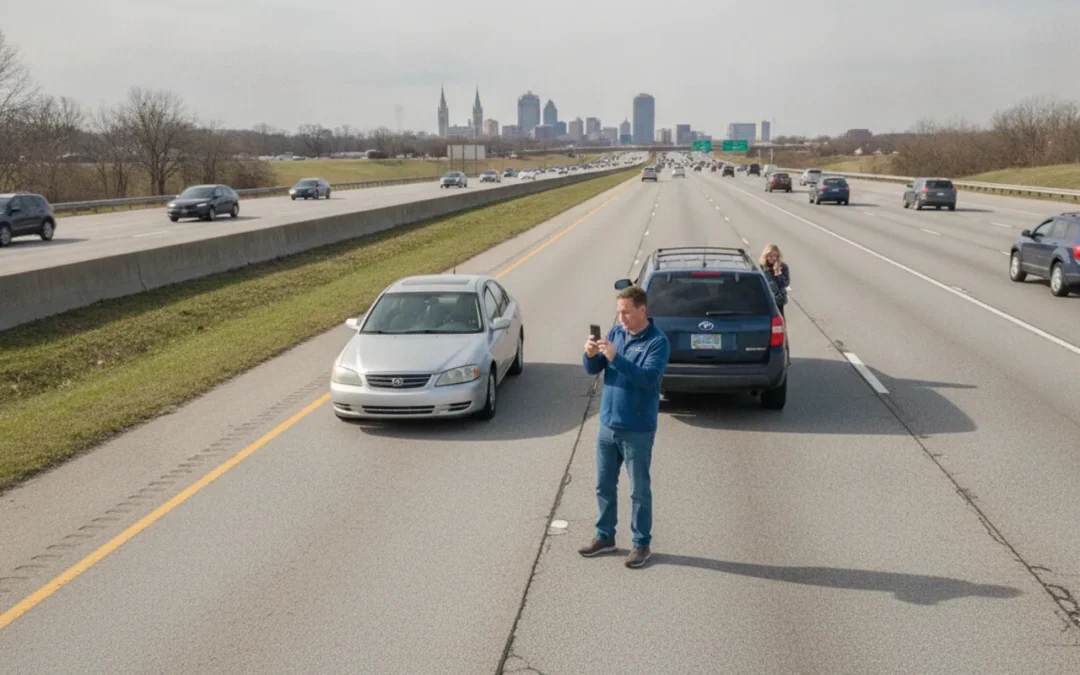
If an aggressive driver caused a crash, you may be facing injuries, vehicle damage, and uncertainty about what to do next. A road rage accident attorney can help you understand how evidence of aggressive conduct may fit into an injury claim. Put safety and medical care first, then preserve what you can without confronting the other driver.
Request a free case evaluation
What should you do right after a road rage crash?
Move out of traffic if you can do so safely. Call 911 if anyone is hurt, the roadway is blocked, or there is an immediate threat. Do not confront or follow the other driver. If the person remains aggressive, stay in a locked vehicle or move to a safer public place if possible.
Seek medical attention immediately for your injuries. Some symptoms may not be obvious at the scene. Follow medical advice and keep copies of visit summaries, bills, prescriptions, and follow-up instructions.
- Report the collision accurately to emergency responders.
- Exchange identifying and insurance information if it is safe to do so.
- Ask willing witnesses for names and contact details.
- Photograph vehicle positions, damage, road conditions, and visible injuries from a safe location.
- Write down what you remember, including the time, place, direction of travel, and actions before impact.
If someone is hurt, do not delay care to take pictures or gather statements. For a wider checklist, see what to do after a car wreck.
What makes a road rage crash different?
“Road rage” is a common description, not proof of how a collision happened or who was responsible. A driver may have followed too closely, swerved toward another vehicle, braked abruptly, blocked a lane, or left the scene. Those observable facts may matter, but a label alone does not establish fault or determine compensation.
Focus on a sequence of events. Note where each vehicle was, traffic and weather conditions, and whether anyone saw or recorded the incident. Avoid guessing about motive. A clear timeline is more useful than a conclusion about what the other driver intended.
Separate what you saw from what you inferred
“The sedan moved into my lane twice, then braked hard” describes actions. “The driver wanted to hurt me” describes a motive you may not be able to establish. Record distance, direction, timing, lane position, signals, braking, contact, and words you actually heard. Mark uncertain details as estimates rather than filling gaps later.
This approach can help when speaking with an officer, insurer, or attorney. Different people may ask about the event in different ways. Notes grounded in what you observed give you a consistent reference without requiring you to speculate.
Which evidence may help explain what happened?
Some evidence can disappear quickly. Nearby businesses may overwrite security footage, vehicles may be repaired, and memories can fade. Preserve what you have and note where additional evidence might exist. Do not put yourself in danger to retrieve it.
| Evidence | What it may show | Practical step |
|---|---|---|
| Photos or video | Vehicle positions, damage, road conditions, or conduct before impact | Save original files and note when and where they were made |
| Witness details | Another person’s observations | Record contact information; do not pressure anyone |
| Police or incident records | Reported accounts and basic collision details | Keep report information and request records through the proper channel |
| Medical records | Symptoms, treatment, and recommendations | Keep visit summaries, bills, and follow-up records |
| Vehicle or phone data | Possible damage details or recorded events | Preserve the vehicle and original data; do not delete or edit files |
Write down possible sources such as a dashboard camera, a nearby storefront, or a traffic camera. Do not assume footage exists or will be available; ask promptly about preservation. Keep the original dash-camera file and make a separate copy for viewing. Avoid trimming, annotating, or posting the only copy online.
If a witness offers a recording or account, save their contact details and ask how to reach them later. Do not coach a witness or ask them to adopt your interpretation. If a business might have footage, note its name, address, and approximate time window. Do not enter private property or demand access. An attorney can assess whether a formal request may be appropriate.
For more on reporting details, see how to report a car accident and the overview of facts that shape a car accident case. Rick Hessig is a Licensed Professional Private Investigator, and the firm develops car accident cases with attention to evidence. That does not guarantee that particular evidence exists or will establish liability.
How should you organize a clear crash timeline?
Start with a chronology while your memory is fresh. Write the approximate time and location, where you were headed, what you noticed first, and what happened in sequence. Include the collision and what happened afterward, such as whether the other driver stayed, left, or continued making threats. Label estimates as estimates.
- Before impact: Note the road, lane, traffic, lighting, weather, and the other vehicle’s observable movements.
- At impact: Record where vehicles touched, how your vehicle moved, and what you felt or heard.
- After impact: Note where vehicles stopped, immediate statements, calls for help, and people who arrived.
- In the days after: Add medical visits, insurer calls, repair steps, and new symptoms with dates.
Do not rewrite earlier notes to make them sound more certain. If you remember another detail later, add a dated note explaining it is an addition. Keep original messages, photographs, and recordings. The goal is not to prove every detail on your own; it is to preserve a useful starting point for reviewing the event.
What should you say to the insurance company?
Report the crash to the appropriate insurer and provide accurate basic information. Keep notes of calls, including dates, names, and what was requested. You can ask for a request in writing if you need time to review it.
Avoid guessing about speed, distance, or fault. Do not exaggerate or minimize symptoms. Be cautious about signing releases or agreeing to a settlement before understanding what it covers. A release may resolve claims beyond a particular repair bill. Learn more about handling an auto insurance claim after a Kentucky crash.
Keep receipts and records related to the crash, including towing or rental costs, medical care, and missed work. These documents may help explain the losses you report, though coverage depends on the facts and applicable insurance. If an adjuster asks for a recorded statement or broad medical authorization, understand what is being requested before agreeing. You can ask for time to review it and seek advice.
What if the other driver leaves?
Do not pursue the vehicle. Note details you safely observed, such as color, make, direction of travel, or a partial plate, and report them to responders and your insurer. Do not fill in missing plate characters unless you clearly label them uncertain. If you have a recording, preserve the original. The claim process may differ when the other driver cannot be identified or located, depending on the facts and available coverage.
How can a road rage accident attorney help?
An attorney can review available facts, explain possible claim steps, communicate with insurers, and help identify evidence that may need preserving. In an aggressive-driving case, that may mean comparing accounts, examining damage, reviewing photographs or video, and considering whether witnesses can clarify the sequence. The approach depends on the facts and available evidence.
Evidence need not be a dramatic recording. Damage patterns, debris locations, statements made soon after the collision, and consistency between a timeline and physical details may all be relevant when evaluating competing accounts. No single item automatically decides fault. The evidence must be considered as a whole alongside applicable law.
In Kentucky and Southern Indiana, rules can depend on where the crash occurred and the specific circumstances. This article cannot determine a deadline or predict how a claim will be resolved. For a related discussion of responsibility among drivers, see who may be liable after a Kentucky car crash. General information about government services is available at USA.gov.
Rick Hessig Law represents car accident victims in the Kentuckiana area. The firm describes its fee arrangement as “No Fee Unless You Win,” with no upfront attorney fee. Case and court costs may be the client’s responsibility. Ask about the written fee agreement and costs before deciding whether to proceed. No attorney can promise a particular settlement, verdict, or result.
What should you bring to a case evaluation?
You do not need a perfect file before asking questions. Bring what you have, or make a short list of what is missing. A small, organized set of records is often easier to discuss than a pile of unsorted papers.
- Any crash report number, incident paperwork, or insurer correspondence.
- Photos, videos, dash-camera recordings, and witness contact information.
- Medical visit summaries, bills, prescriptions, and notes about missed work.
- Repair estimates, towing receipts, and vehicle damage information.
- A brief timeline describing what happened before, during, and after the collision.
If you send digital files, identify what each file shows and when it was created. Keep copies for yourself. Make a list of questions: What fee terms apply? How are costs handled? What information may be needed? Who will communicate with you? Be candid about facts that may seem unfavorable, including what you did or said at the scene. You can learn what to expect from a free car accident consultation.
Frequently asked questions
Does aggressive driving automatically prove the other driver is at fault?
No. The circumstances and supporting evidence matter. “Road rage” does not by itself establish fault or decide an insurance claim.
Should I follow the other driver to get a license plate?
No. Do not pursue or confront an aggressive driver. Tell responders what you remember and share safely obtained details with the proper authorities and insurer.
What if I do not have video or witnesses?
You can still document your recollection, preserve photos and records, and note possible sources of footage. A case evaluation may help identify what information could be available, but no evidence or outcome is guaranteed.
Should I post about the crash online?
It is prudent to avoid posting details, accusations, or images about a disputed crash while facts are being reviewed. Keep original records and communicate through appropriate channels. Do not delete existing posts or messages without guidance if they may relate to the event.
Can I ask for help if I am unsure whether I have a claim?
Yes. You may request a free, no-obligation case evaluation and describe what happened. It is a conversation about the facts, not a promise that the firm will take the case or that a particular result will follow.
A careful next step
After a road rage crash, put safety and medical care first, preserve records you can, and avoid escalating contact with the other driver. If you were injured in a collision in Kentucky or Southern Indiana, a case evaluation can help you ask questions about your options. This information is for general informational purposes only and is not legal advice. In accordance with KBA regulations, case and court costs may be the responsibility of the client.