
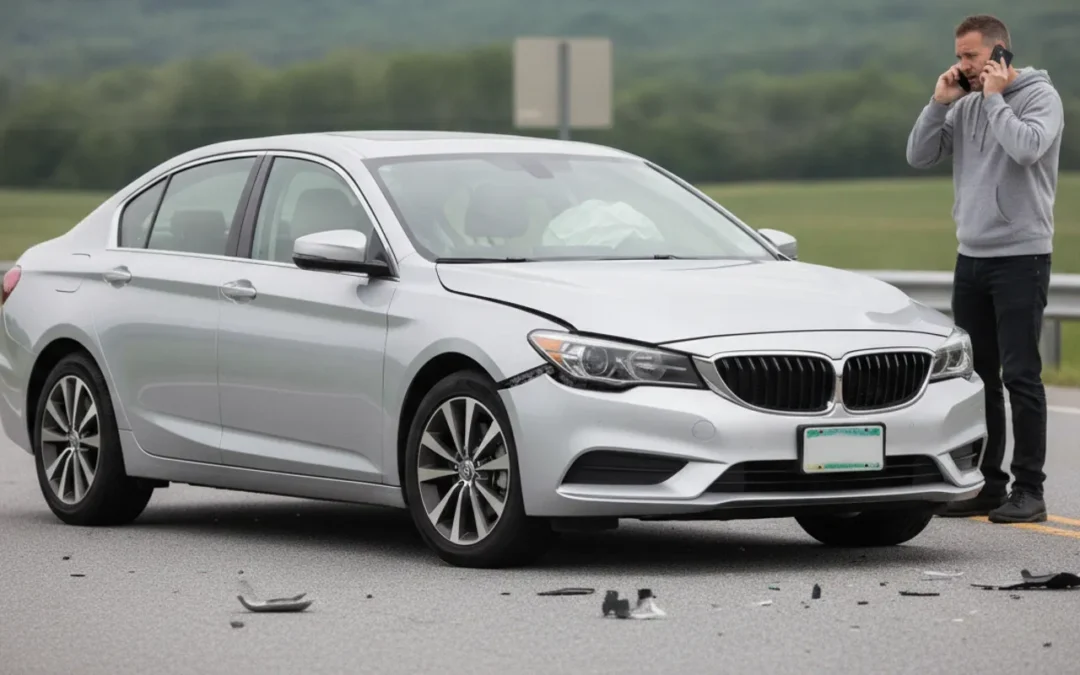
If you are trying to decide what to do after a hit and run in Kentucky, start with safety, medical care, and a prompt report. Do not chase the other driver or put yourself in traffic to gather evidence. Once you are safe, write down what you remember, preserve the available information, and notify your insurer.
Request a free case evaluation
What should you do immediately after a hit-and-run?
If you can move your vehicle out of traffic safely, do so and turn on the hazard lights. Check yourself and passengers for injuries, but do not assume that someone is unhurt just because they can stand or speak. Seek medical attention immediately for your injuries. Call 911 if anyone may be hurt, the roadway is dangerous, or an immediate emergency exists; follow the dispatcher’s instructions.
Do not follow, block, or confront the vehicle that left. A pursuit can create another collision and may make it harder for you to get help. If you saw the vehicle leave, note its direction and any identifying details from a safe location. Let law enforcement handle the investigation.
When the scene is safe, contact law enforcement and explain that the other driver left. Give the location as precisely as possible, including the nearest cross street, exit, landmark, or mile marker, and describe when the collision happened. Ask for the agency name, report number, and instructions for obtaining the report. If you are not sure which response is appropriate, describe the facts to the dispatcher and ask what to do.
What information should you record?
Make notes as soon as practical because memory can fade and details can blur together. Separate what you directly observed from what someone else told you. If you are estimating a time, speed, distance, or vehicle detail, label it as an estimate instead of presenting it as certain.
- Vehicle make, model, color, approximate size, and body style.
- Any part of a license plate you remember, including the state, letters, or numbers. Do not try to fill in missing characters.
- The direction the vehicle traveled and any turns, exits, or roads it used.
- Visible damage, decals, roof racks, unusual lights, or other distinctive features.
- Time, location, weather, traffic, road conditions, and what happened just before impact.
- Names and contact information for witnesses who are willing to provide them.
- Names of responding officers or the agency, plus the report number when available.
A short voice memo can help capture details while they are fresh. If a passenger is with you, ask them to make a separate account in their own words. Keep the original notes, photos, and videos; do not edit the only copy. If you remember something later, add a dated note and share the update with the investigating officer or insurer.
How can you preserve evidence without taking risks?
Only take pictures when it is safe to do so. Photograph your vehicle from several angles and include close views of each damaged area. If the vehicles have not moved and it is safe, capture their positions, debris, skid marks, road signs, lane markings, and the wider intersection or roadway. A broad scene photo can show context that a close-up cannot.
Do not stand in an active lane or approach an unsafe shoulder for a better image. If the vehicles need to be moved, prioritize safety and photograph the scene only if doing so does not delay help or create danger. Keep the original files and note what each image shows. Do not post accusations or unverified details on social media.
There may be cameras at nearby homes, businesses, traffic signals, or in other vehicles. Make a note of their locations and the approximate time window. Tell the officer, insurer, or your attorney about possible footage promptly; recordings may not be kept indefinitely. Do not trespass or assume a camera captured the impact, and do not put yourself at risk trying to obtain a recording.
Build one organized folder for the crash. Save photos, your notes, the report number, witness contacts, repair estimates, medical paperwork, receipts, and insurer correspondence. Keep a basic timeline of calls and appointments. If you track symptoms or missed work, record dates and facts in your own words, and keep those notes with related records rather than trying to calculate a claim value.
A government-hosted Analysis of Traffic Crash Data in Kentucky describes statewide crash-data analysis. It provides broad context, not a determination of what occurred in an individual hit-and-run.
What if you have only part of a plate or no witness?
Report what you do know, even if you remember only a color, vehicle type, partial plate, or direction of travel. A partial detail is more useful when it is clearly described as partial than when someone guesses at the missing information. If you are uncertain whether the vehicle was dark blue or black, say so. The report should distinguish a firm memory from an estimate.
No witness does not mean you should skip documentation. Your own account, photographs of the damage and roadway, medical records, repair documents, and a consistent timeline may still help explain the event. If a passenger was present, their independent recollection may add another perspective. Do not coordinate stories; each person should describe what they actually observed.
If you discover a possible witness or camera after leaving the scene, write down where and when you found it. Share the information with law enforcement and ask how to provide any contact details or recordings. Keep a note of whom you contacted and when. Do not promise a witness anything or pressure them to adopt a particular description.
How should you communicate with your insurer?
Notify your own insurer promptly and follow the instructions in your policy. Explain the basic facts you know, say that the other driver left, and ask what documents the insurer needs. You can ask how to submit the police report and whether it wants photographs, repair information, or other records. Keep a copy of what you send, the date, and the name or claim reference for each contact.
Coverage depends on your policy and the circumstances. Ask the insurer to identify which provisions it is considering, such as uninsured motorist or collision coverage, and to explain its position. Do not assume a particular coverage applies simply because the other driver left. Review your policy documents and request explanations in writing when something is unclear.
Be accurate and avoid guessing about the other driver, fault, speed, or the full extent of injuries before they have been assessed. If an adjuster requests a recorded statement or sends paperwork, make sure you understand what is being requested and ask questions. You may seek legal advice before agreeing to terms. A settlement release can affect the ability to seek additional payment, so understand its effect before signing. Read our guide to reviewing a Kentucky car accident settlement release.
Which steps matter, and when?
| Step | When | What to retain or note |
|---|---|---|
| Move to safety and request emergency help if needed | Immediately | Location and any instructions from dispatch |
| Report the hit-and-run | As soon as practical | Agency, report number, officer details |
| Write down the vehicle and witness details | When safe and while memory is fresh | Notes, partial plate, direction of travel, contacts |
| Photograph damage and the scene | Only when safe | Original images and context |
| Notify the insurer | Promptly under policy instructions | Claim contact, correspondence, policy questions |
| Organize medical, repair, and expense records | As records become available | Copies, dates, receipts, and follow-up notes |
This sequence is a practical organizer, not a substitute for emergency directions or your policy terms. If immediate needs make it impossible to complete every task at the scene, handle urgent safety and medical needs first, then make notes and contact the relevant people when you can.
How can you keep the records easy to use?
Use a simple folder, whether digital or paper, and give it a clear name such as the crash date and location. Separate items into a few groups: police and witness information, photos, medical records, vehicle repairs, and insurance. A complicated system is not necessary. The goal is to find a document quickly and know where it came from.
Keep a running contact log with the date, person or organization, phone number or email, subject, and any requested follow-up. For example, if the adjuster asks for a report, note the request date and the date you sent it. If the report is not yet available, record that you asked how to obtain it. This helps you avoid repeating calls and gives you a clear timeline.
Store files in their original form when possible. Keep backups of photos and messages, and do not overwrite earlier notes when you add a correction. Instead, add a dated update explaining what changed and why. Preserve bills and receipts, including towing or transportation records if relevant, and keep copies of estimates or repair invoices. Do not discard damaged parts or documents before asking whether they may be needed.
What should you prepare before discussing a case?
You do not need a complete file to ask questions. If available, gather the report or report number, photos, insurer information, medical and repair documents, and your brief timeline. Write down what you do not know yet: whether footage exists, whether a witness can be reached, what coverage applies, or what the next insurer request means. A concise list keeps the conversation focused.
Rick Hessig Law serves car-accident victims in Louisville, Kentucky, and Southern Indiana. Rick Hessig is personally involved in the practice and is also a Licensed Professional Private Investigator. That investigative background can inform how evidence is reviewed, but it does not promise a particular result. For related background, see the guide to claims involving an uninsured driver in Kentucky.
The firm offers a free, no-obligation case evaluation and handles cases on a contingency-fee basis: No Fee Unless You Win. There is no upfront attorney fee. In accordance with KBA regulations, we must inform you that case and court costs may be the responsibility of the client. You can also read about how no-win, no-fee claims work in Kentucky.
For practical context on reporting, see how to report a car accident, and for insurance questions, review handling an auto insurance claim after a Kentucky crash. If you want to discuss your circumstances, you can request a free case evaluation.
Contact Rick Hessig Law about your crash
Frequently asked questions
Should I call the police if I did not see the other vehicle’s plate?
Yes. Report what happened and provide the details you recall, even if you have no plate information. The time, location, vehicle description, and direction of travel may still be useful.
Should I chase the driver who left?
No. Stay in a safe place, request help, and provide the authorities with the vehicle description and direction of travel. Do not follow or confront the driver.
What if I feel fine immediately after the collision?
Pay attention to how you feel and seek medical care if you are injured or develop concerns. Keep records of care and follow the advice of your medical provider.
Can my own insurance help after a hit-and-run?
It may, depending on your policy and the facts. Ask which coverages the insurer believes may apply and request an explanation. Do not treat coverage as guaranteed without reviewing the policy.
A careful next step
After a hit-and-run, put safety and medical care first, make a clear report, and preserve information without taking risks. Keep copies of key records and ask for help if you are unsure how to respond to an insurance request. This information is general and is not legal advice; a case evaluation can help you discuss your particular circumstances.