
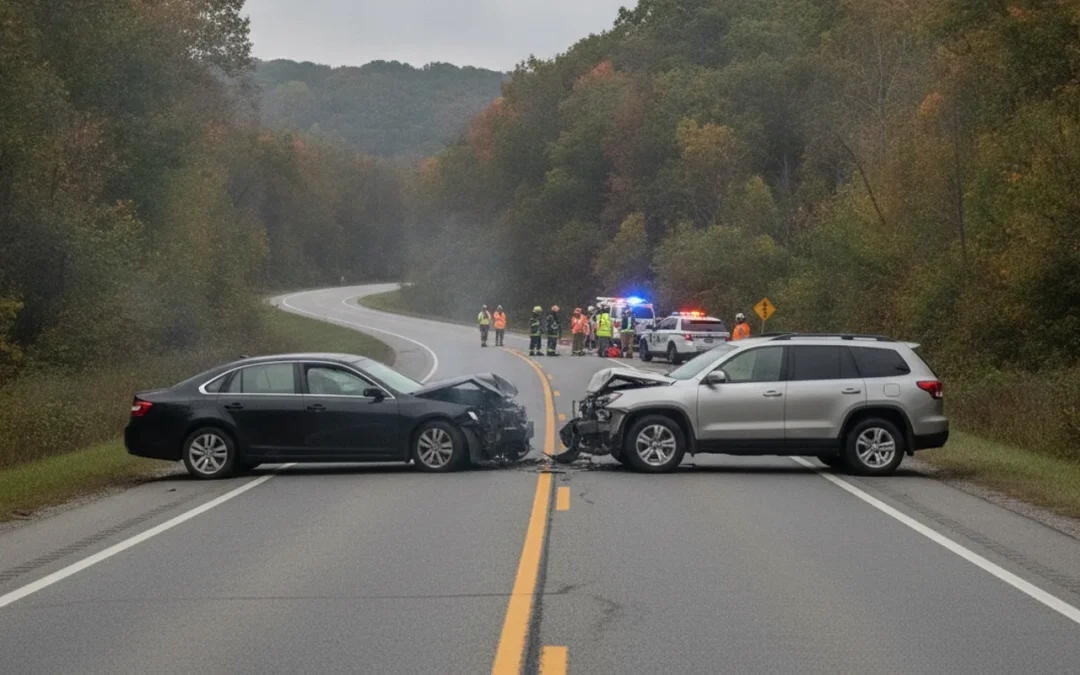
A wrong-way crash can leave you hurt, shaken, and unsure what to do next. If you are looking for a wrong way driver car accident lawyer, start with your safety and medical care, then preserve what you can about the collision. You do not have to figure out the insurance questions alone. A case evaluation can help you understand possible next steps.
Request a free case evaluation
What should you do first after a wrong-way crash?
Wrong-way crashes can happen on interstates, ramps, divided roads, and city streets. The collision may involve a head-on impact, but not every crash happens the same way. Focus on immediate safety first. If you are in danger, move to a safer place only if you can do so without worsening an injury. Call emergency services when someone needs urgent help or the scene is unsafe.
Seek medical attention immediately for your injuries. Some symptoms may not be obvious in the first moments after a collision. Follow medical advice and keep copies of visit summaries, instructions, bills, and other records you receive. A medical professional can assess your condition; this article cannot diagnose an injury.
If you can do so safely, gather basic information and preserve evidence. You can use the firm’s car accident checklist as a reminder of common information to collect. Do not put yourself in traffic to take pictures, confront the other driver, or try to investigate a hazardous scene.
- Note the date, approximate time, roadway, direction of travel, and nearby intersections or exits.
- Get names and contact information for the drivers and any witnesses, when possible.
- Photograph the vehicles, visible damage, road layout, signs, signals, debris, and skid marks only when it is safe.
- Keep any messages or paperwork you receive from insurers, tow companies, or medical providers.
- Write down what you remember as soon as you are able, including where each vehicle was traveling before impact.
Details may become harder to recall later. A written account does not prove fault by itself, but it can help you keep your recollection organized. For guidance on making an accident report, see how to report a car accident. Do not guess at facts you did not observe.
Why can a wrong-way driver crash be difficult to investigate?
A wrong-way collision may appear straightforward, but the cause and sequence of events still need to be established. The other driver’s direction of travel is important, but it may not answer every question about how the crash happened, what evidence is available, or which insurance policies may apply.
Investigators may look at vehicle damage, photographs, physical evidence, witness accounts, roadway design, and available video. A police report may provide useful information, but it is not the only possible evidence. If you are unsure what the report says, or whether a report exists, this guide explains whether a claim may be possible without a police report.
Evidence can be scattered across different sources. A nearby business may have a camera, a witness may leave before contact information is collected, or a vehicle may be repaired or moved. Preserve what you already have and make a note of where additional evidence might exist. Do not trespass or try to obtain private records yourself.
Wrong-way driving can have different explanations. A driver may have made a navigation or turning mistake, become confused, or been affected by another circumstance. Do not assume why the driver was on the wrong side of the road. A lawyer can help review the available information, but no investigation can guarantee a particular conclusion or recovery.
What evidence may help explain how the crash happened?
The useful evidence depends on the facts of the collision. Keep original photos and videos when possible, and save copies in a secure place. If someone else took a picture or witnessed the crash, ask whether they are willing to share their contact information. Avoid editing images or posting detailed commentary about the crash online.
Potentially relevant materials may include:
- Scene photographs, dash-camera footage, and vehicle-camera recordings.
- Names and accounts from passengers, witnesses, and responding personnel.
- Vehicle damage, inspection information, and records showing where vehicles were located after impact.
- Medical records and bills related to evaluation and treatment.
- Receipts or records showing missed work, transportation needs, or other costs you are tracking.
- Insurance letters, claim numbers, and notes of calls with adjusters.
Do not assume that every item will be available or decisive. An attorney may help identify what is relevant, organize records, and consider whether additional investigation is appropriate. Rick Hessig Law emphasizes personal attorney involvement and investigator-backed case development. That does not mean a specific piece of evidence will exist or that any claim will have a particular outcome.
For a broader explanation of evidence and fault issues in Kentucky, read how fault may be evaluated after a car accident and what facts may shape a car accident case.
Which insurance questions may come up?
After a wrong-way crash, there may be questions about the at-fault driver’s coverage, your own policy, and the process for documenting injuries and losses. The answer depends on the policies, the facts, and the applicable law. Do not assume that an insurer’s first explanation covers every possible option.
You may receive calls or forms from an insurance company. Be accurate and avoid guessing. Before giving a recorded statement or signing a release, make sure you understand what is being requested and what the document covers. You can ask for time to review paperwork. Keep a record of who contacted you, when, and what was discussed.
Your own policy may have terms worth reviewing, including provisions related to uninsured or underinsured motorists. Coverage depends on the specific policy and circumstances. These resources explain some related issues: claims involving an uninsured driver in Kentucky and underinsured-driver claims.
For general road-safety information, the National Highway Traffic Safety Administration is a federal resource. Insurance and legal questions about a specific Kentucky crash should be assessed using the facts and applicable policy documents.
What should you prepare for a lawyer’s case evaluation?
You do not need to have every document or know exactly what happened before asking questions. A short, organized account can make an initial conversation more useful. If you have a case number, insurance information, photographs, medical paperwork, or witness contact details, gather what is readily available. Do not delay medical care or put yourself at risk just to collect more materials.
A lawyer may ask about:
- When and where the crash happened, and the direction each vehicle appeared to be traveling.
- What you personally saw or heard before and after impact.
- Whether emergency services responded and whether you have a report or report number.
- What injuries or symptoms you have experienced and what care you have received.
- Which insurers have contacted you and what documents you have received or signed.
- Whether anyone witnessed the collision or whether you know of nearby cameras.
Share what you know, and say when you are uncertain. A careful review may require records or information that is not available during an initial call. You can learn more about what to expect in a free car accident consultation. A case evaluation is not a promise that the firm can take a case or achieve a particular result.
How should you handle an early settlement offer?
An insurer may contact you while you are still sorting out medical care, vehicle damage, and the facts of the collision. You do not have to treat an early offer as a final answer or respond before you understand what the insurer is asking you to accept. Take time to read the offer and any release carefully. If the language is unclear, ask for an explanation and keep a copy of the response.
Before comparing an offer with your situation, gather the information you have about treatment, bills, missed work, and other costs. Some details may still be changing while you receive care. Do not estimate an amount based on another person’s accident or a number found online; those examples may involve different injuries, coverage, evidence, and circumstances. A general settlement guide cannot calculate the value of your particular claim.
You can review what may affect expectations about a car accident settlement and what a settlement demand letter may explain. These resources are general information, not a promise of a settlement or advice about whether to accept a specific offer. If an offer includes a release, make sure you understand the terms and their effect before signing.
How do legal fees and case costs work?
Rick Hessig Law handles injury cases on a contingency-fee basis described as “No Fee Unless You Win.” There is no upfront attorney fee. The written agreement explains the fee arrangement and how case expenses are handled, so read it and ask questions before signing. Do not assume every possible expense is free or that the same terms apply to every case.
In accordance with KBA regulations, we must inform you that case and court costs may be the responsibility of the client. Ask how costs are treated if there is no recovery, and how they may affect any recovery if there is one. The answer should come from the agreement and your discussion with the firm, not from a general article.
If you want to understand the basic structure, see how no-win, no-fee claims work in Kentucky. A free case evaluation can help you ask questions about the agreement without assuming a particular outcome.
How can you compare your next-step options?
There is no single checklist that resolves every claim. The table below gives a practical way to think about common next steps. It is not a prediction or a legal determination.
| Option | What it can help with | What to keep in mind |
|---|---|---|
| Handle initial communications yourself | Collecting claim information and sharing basic facts | Keep notes, be accurate, and review documents before signing or agreeing to anything. |
| Ask your insurer about your policy | Understanding the coverage and reporting process stated in your policy | Coverage depends on policy language and circumstances; record the guidance you receive. |
| Request a lawyer’s case evaluation | Discussing evidence, insurance questions, and potential next steps | An evaluation does not guarantee representation or a result. Ask about fees and costs. |
| Continue documenting care and losses | Keeping treatment records, bills, and work-related information organized | Follow medical guidance and keep originals or clear copies when possible. |
You can read about the stages of a Kentucky car accident claim for more context. Each claim has its own facts, and a general description cannot tell you what a specific insurer will do.
When may a wrong-way driver car accident lawyer be useful?
It may be useful to speak with a lawyer when you have significant injuries, questions about who was driving in which direction, conflicting accounts, uncertainty about insurance, or difficulty understanding forms and requests. You may also want help organizing evidence or determining what questions to ask next. You do not need to decide everything in the first conversation.
Rick Hessig Law serves car-accident victims in Louisville and the Kentuckiana area, including Southern Indiana. Attorney Rick Hessig is licensed in Kentucky; the firm should not be assumed to represent a matter in another state without local counsel. If your collision happened in Indiana, clarify the location and any licensing questions during the evaluation.
For more on legal help after a collision, see when to consider getting an attorney after a car accident. A lawyer can explain what may be relevant to your situation, but cannot promise a settlement, verdict, or recovery.
Request your free, no-obligation case evaluation
Frequently asked questions
Does a wrong-way crash automatically mean the other driver is legally responsible?
Not automatically. The direction of travel may be important, but responsibility depends on the evidence and applicable law. Avoid relying on assumptions before the available facts have been reviewed.
Should I speak with the other driver’s insurance company?
You may need to provide information, but be accurate and do not guess. Ask what a request is for, keep copies of documents, and consider getting advice before giving a recorded statement or signing a release.
What if I do not have a police report?
A missing report does not necessarily answer whether you have options. Preserve other available information, such as photographs and witness details, and ask about the circumstances of your crash. See the linked guide above for more on this question.
Can I ask about a case before I have all my medical records?
Yes. You can ask for an initial case evaluation with the information you have. Tell the lawyer what records may still be outstanding and continue following your medical providers’ instructions.
Talk through your next step
After a wrong-way crash, prioritize safety and medical care, preserve information you can gather safely, and keep insurance and treatment records together. A careful case evaluation can help you understand what questions may apply to your situation without promising a particular result.