
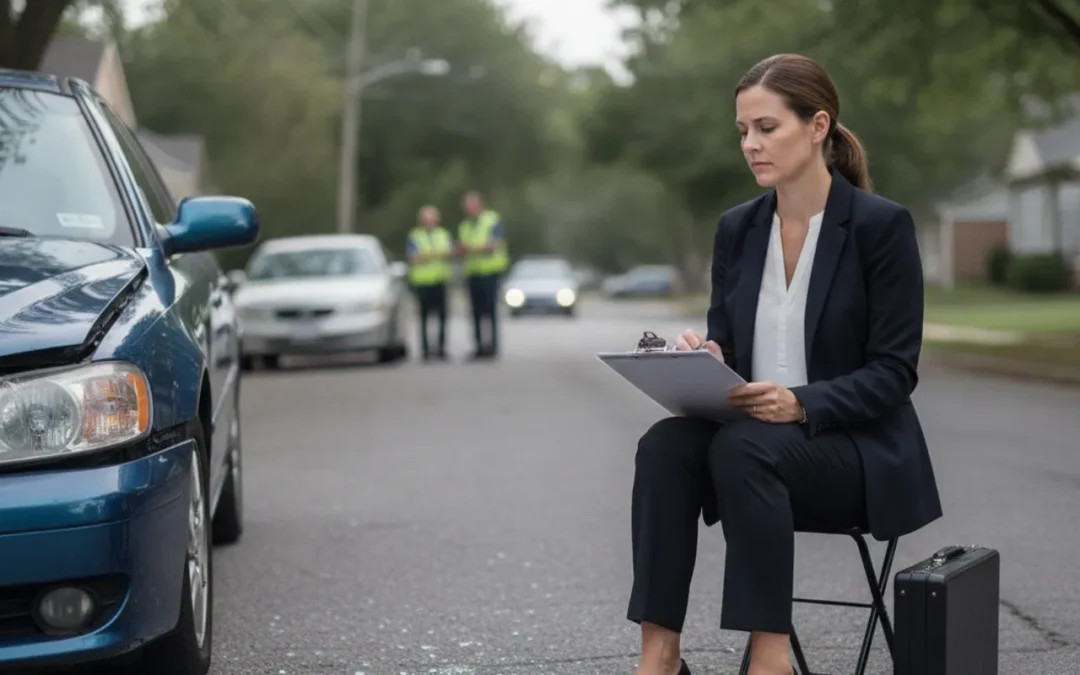
If you were hurt in a crash and the other driver has no insurance, or not enough insurance, you may be wondering what happens next. An uninsured car accident lawyer can review the available facts and insurance documents with you, explain possible paths, and help you understand what information may matter. The right next step depends on your policy, the crash, and the available evidence.
Request a free case evaluation
What does an uninsured car accident lawyer review?
A lawyer reviewing an uninsured-driver crash will usually start with the basic questions: Who was involved? What insurance policies may apply? What happened, and what injuries or losses followed? The goal at this stage is to understand the situation, not to promise a result.
Depending on the facts and the policy language, possible sources of coverage may include uninsured motorist (UM) or underinsured motorist (UIM) coverage under your own auto policy. UM coverage may be relevant when the at-fault driver has no applicable insurance. UIM coverage may be relevant when that driver has insurance but the available coverage may not be enough for the losses. Whether either applies, and what steps the policy requires, must be checked against the actual policy and circumstances.
The lawyer may also assess how the crash occurred, what evidence is available, what treatment you have received, and whether there are other potentially responsible parties or policies. A review is not a guarantee that a claim will be accepted or paid. For background on how the crash facts can affect a claim, see what facts shape a car accident case.
What should you do after a crash with an uninsured driver?
Focus first on immediate safety and health. Seek medical attention immediately for your injuries. You do not need to figure out insurance coverage at the roadside. Once it is safe, make a clear record of what happened and keep the information you receive.
- Get medical attention. Tell the provider about your symptoms and follow the care instructions you receive. Symptoms can change, so keep a record of appointments and any new concerns.
- Report the crash as appropriate. Keep any report or incident information you receive. If no officer came to the scene, that alone does not tell you whether an insurance claim can be made. This guide explains what to consider when there is no police report.
- Exchange and preserve information. Save the other driver’s name, contact details, vehicle information, and any insurance details they provide. Do not assume a card or verbal statement answers every question about coverage.
- Notify your insurer. Review your policy and promptly ask your insurer how to report the collision and what documents it needs. Keep a note of the date, the person you spoke with, and any instructions or claim number.
- Keep records in one place. Save photos, messages, estimates, medical records and bills, wage information, and letters from insurers. Avoid editing or deleting original photographs and messages.
If you want a practical overview of the first steps, use this guide to what to do after a car wreck. Your safety comes first; do not return to a dangerous location or try to collect evidence in traffic.
How can your own auto policy matter?
When the other driver may be uninsured or underinsured, your own policy deserves careful review. Look for the declarations page and the policy wording related to UM and UIM coverage, notice requirements, cooperation, and claim procedures. The declarations page can identify coverages and limits, but the full policy language may contain conditions and exclusions that matter too.
Do not assume that a policy includes a particular protection, that a limit is available for every injured person, or that an insurer will handle the claim in a particular way. The answer depends on the policy and facts. If more than one vehicle or policy is involved, the coverage questions may require additional review.
For a focused overview of the process, read how to file a claim involving an uninsured driver in Kentucky. If the at-fault driver has some coverage but it may not cover the losses, this page on making an underinsured-driver claim addresses that different situation.
What if you do not know whether the other driver was insured?
It is common to leave a crash scene without a clear answer about the other driver’s insurance. A policy card may be out of date, the driver may not have the policyholder’s information, or the insurer may need more information before confirming whether coverage applies. Do not treat an uncertain answer as proof that there is no coverage. Write down exactly what you were told, keep any photo or document you received, and ask your insurer what it can verify.
If you have only a name, plate number, partial insurance information, or a report number, keep it. Share the details you do have with your insurer and explain what is missing. Do not try to confront the other driver or investigate at an unsafe location. If there were witnesses, nearby businesses, or vehicle cameras that may have recorded the event, make a note of that possibility. A lawyer may be able to help identify useful records or clarify which questions to ask, but the availability of evidence and coverage depends on the circumstances.
It also helps to separate what you know from what you suspect. For example, note whether you personally saw an insurance card, whether the other driver said a policy had lapsed, or whether the insurer has formally responded. Clear notes reduce confusion when you later speak with an adjuster or attorney. If another driver disputes how the collision occurred, this guide on evidence that may help explain fault offers related context.
What evidence can help explain the crash and your losses?
Evidence can help clarify what happened, who may have been involved, what insurance information was available, and how the crash affected you. You do not need to build a legal case on your own. Preserve what you can safely access and share it with your insurer or lawyer when asked.
- Scene and vehicle photographs: Keep images of the vehicles, damage, road conditions, traffic controls, and visible surroundings, if you took them safely.
- Witness details: Write down names and contact information for people who saw the collision, if available.
- Medical records: Keep visit summaries, bills, referrals, and notes about symptoms or limitations. Follow medical advice and do not delay care to collect paperwork.
- Work and expense records: Save pay information, missed-work dates, repair estimates, towing receipts, and other documents connected to the crash.
- Insurance communications: Keep claim numbers, letters, emails, and notes from calls. Ask for important instructions in writing when practical.
Evidence can become harder to locate over time. If you have photos, video, or messages that may be relevant, preserve the originals and note when and how you received them. An attorney may investigate further when appropriate, but no single item guarantees a particular outcome.
How should you communicate with insurance companies?
Be accurate and careful when speaking with any insurer. You can report basic facts without guessing about details you do not know. If you are unsure, say so rather than filling in gaps. Keep a copy of anything you submit and note what the insurer requests.
Before giving a recorded statement, signing a release, or accepting a proposed resolution, make sure you understand what you are being asked to do and what the document may cover. Do not sign a form you do not understand. If an insurer requests information on a deadline, ask what is needed and when; do not ignore the request.
If the insurer says a type of coverage does not apply or asks you to take a different step, request a clear explanation and keep the response with your policy papers. Ask which policy language or missing information is relevant, and note whether there is anything you need to send in reply. A denial or disagreement does not by itself answer every question about the crash; the policy and the stated reason should be reviewed in context. If the explanation is unclear, you can ask the insurer to clarify it or speak with a lawyer about the documents before deciding how to respond.
A claim involving your own UM or UIM coverage can still involve policy requirements and disagreements about facts, coverage, or the value of losses. You can read more about handling an auto insurance claim after a Kentucky car accident before deciding what questions to ask.
How can you keep the claim process organized?
Even a straightforward claim can involve several conversations and documents. A simple log can help you keep track without making the process harder. Record the date and time of each call, the name or department of the person you spoke with, the claim number, what was requested, and what you agreed to send. If you mail or upload documents, keep a copy and note when you sent them.
Store crash materials separately from ordinary messages so they are easy to find. One folder can hold the report and insurance papers; another can hold medical records and bills; a third can hold vehicle and work-related documents. You can also keep a short list of unanswered questions, such as whether the other driver’s coverage is confirmed, which policy provision the insurer is discussing, or whether a form is a release. Ask the insurer to explain unfamiliar terms rather than relying on a guess.
Do not alter original documents or discard letters because you have scanned them. If an insurer gives a verbal explanation, write down your understanding and ask for written confirmation when the issue is important. This kind of organization does not determine coverage or prove a claim, but it can make it easier for you and anyone reviewing the matter to see what has happened and what still needs an answer.
What is the difference between uninsured and underinsured?
| Situation | What it generally means | Possible next step |
|---|---|---|
| Uninsured driver | The other driver may have no applicable liability insurance. | Check your own policy for possible UM coverage and ask the insurer about notice and claim procedures. |
| Underinsured driver | The other driver may have liability insurance, but the available amount may not cover all claimed losses. | Review the at-fault driver’s coverage and your policy for possible UIM coverage and any required steps. |
| Insurance status unclear | Coverage has not been confirmed or the available documents do not answer the question. | Preserve the information you have and ask the insurer to clarify what applies. |
This table is a starting point, not a coverage decision. Terms, limits, exclusions, and procedures depend on the policies and circumstances involved. For official Kentucky insurance information, you can visit the Kentucky Department of Insurance.
When may it help to speak with a lawyer?
A conversation with a lawyer may be useful if you have injuries, the insurance status is unclear, the insurer disputes coverage or responsibility, you are receiving requests you do not understand, or you are unsure how to document your losses. It may also help if you need someone to review the policy language and explain the next steps in plain language.
When choosing someone to speak with, ask who will handle your questions, what documents would be useful, whether there is a fee for an initial evaluation, and how attorney fees and case expenses are handled. Rick Hessig Law focuses on car-accident victims in Louisville and Kentuckiana, including Southern Indiana. Rick Hessig is personally involved in the practice and brings investigative experience to case development.
Rick Hessig Law handles injury matters on a contingency-fee basis: “No Fee Unless You Win,” with no upfront attorney fee. In accordance with KBA regulations, we must inform you that case and court costs may be the responsibility of the client. The details of any representation and expense arrangements should be discussed directly before you decide what to do.
What should you bring to a case evaluation?
You do not need every document before asking questions. If available, gather your auto insurance policy or declarations page, the other driver’s insurance information, crash report or incident details, photographs, medical paperwork, repair estimates, and any insurer letters or messages. A short timeline can also help: when the collision happened, what you remember, when symptoms began, and what communications followed.
Be ready to explain what you know and what remains uncertain. If you do not have the other driver’s policy details or a report, say so. The evaluation can identify what information may be needed next; it does not mean a claim is accepted or that a particular recovery is assured. To understand the meeting format, see what to expect from a free car accident consultation.
Request a free, no-obligation case evaluation
Frequently asked questions
Can I make a claim if the other driver has no insurance?
Possibly. Whether a claim can be made depends on the facts, the insurance policies that may apply, and any relevant policy terms. Ask your insurer about available coverage and consider getting the policy reviewed if the answer is unclear.
Should I contact my own insurance company after the crash?
Review your policy and promptly ask your insurer how to report the collision and what information it needs. Follow the instructions you receive, keep records of communications, and avoid guessing when you do not know an answer.
Does hiring a lawyer guarantee that I will receive compensation?
No. A lawyer can review the facts, investigate as appropriate, explain potential options, and communicate with insurers, but cannot guarantee that a claim will be accepted or that you will receive a particular amount.
A careful next step
An uninsured-driver crash can leave you sorting out health concerns, vehicle damage, and unanswered insurance questions at the same time. Keep the records you have, ask your insurer clear questions, and consider a case evaluation if you want help understanding the options that may fit your situation.