
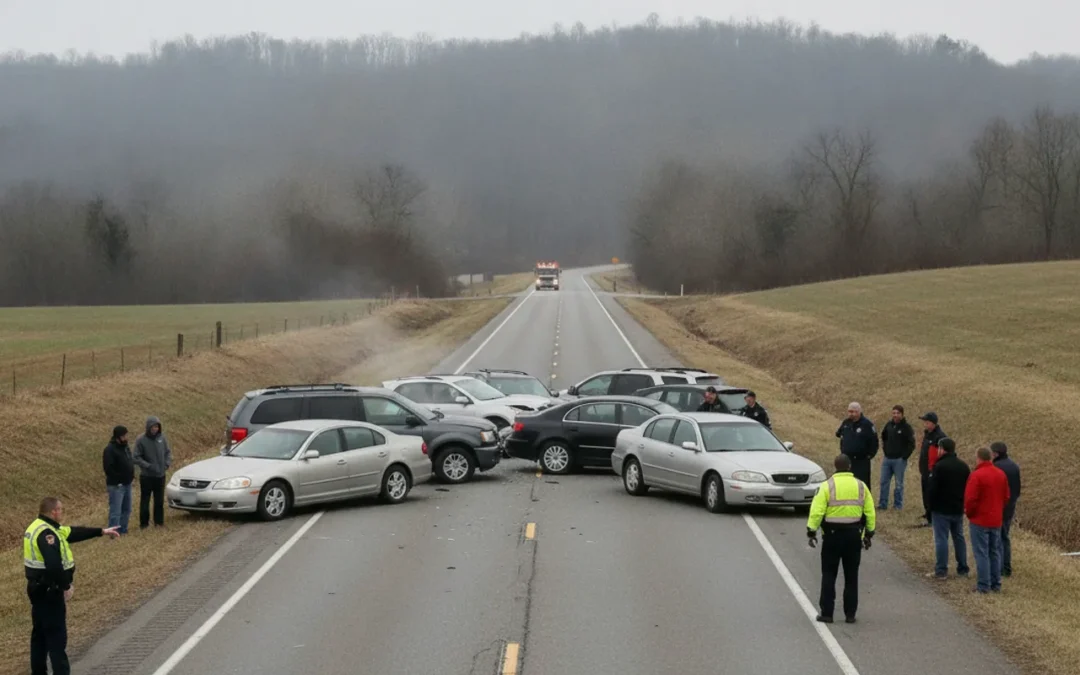
A multi vehicle accident lawyer may help you understand what to do when a Kentucky chain-reaction crash involves several drivers, impacts, and insurance companies. Start with your health and safety, then preserve what you can without guessing about how the collision happened. If you have questions about your situation, you can read about facts that may shape a car accident case.
Request a free, no-obligation case evaluation
Why can several-vehicle crashes be difficult to sort out?
A collision involving several vehicles may not happen as one clear impact. One car may be hit from behind and pushed into the car ahead. Another driver may brake or change lanes in response, and a separate impact may follow. A vehicle can be struck more than once, and occupants may have seen only the moments immediately around their own car.
That makes the order of events important. Someone may know that their vehicle was hit but not whether the first impact occurred a few seconds earlier, or which car caused the next contact. A quick assumption that the last driver in a line is responsible for every injury may not match the evidence. The number of cars involved, by itself, does not establish who caused the collision or how responsibility should be evaluated.
For example, imagine a stopped vehicle struck from behind and pushed into the car in front. The driver in the middle may have two areas of damage, while the front vehicle has evidence of a separate impact. The damage can raise questions about the sequence, but it does not answer them by itself. Investigators and insurers may compare accounts with vehicle positions, photographs, road conditions, witness descriptions, and other available records.
For general information about staying safe around roadway incidents, the National Highway Traffic Safety Administration provides road-safety resources. Your immediate decisions after a crash should still reflect the conditions at the scene and any instructions from emergency responders.
What should you do immediately after a chain-reaction crash?
Focus on safety and medical care first. Seek medical attention immediately for your injuries. Do not put yourself in traffic or delay urgent care to gather photographs or information.
- Get away from immediate danger if you can do so safely. Follow directions from emergency responders. Avoid standing between vehicles, walking in an active lane, or trying to move a disabled vehicle if doing so could expose you to traffic.
- Call 911 when someone needs emergency help or a hazard remains. Tell the dispatcher where the crash is and describe immediate dangers. If you are unsure what to do, explain the situation and follow the dispatcher’s instructions.
- Exchange basic information when it is safe. Get names and contact information, driver and vehicle details, and insurance information from involved drivers. If several cars are involved, keep each driver’s information separate so it is clear who was in which vehicle.
- Ask witnesses for a way to reach them. Someone on a sidewalk or in a nearby car may have seen the approach to the collision, not just the final vehicle positions. Note where each witness was when they observed it.
- Take scene photographs only from a safe place. If conditions allow, photograph the vehicles, damage, roadway, traffic controls, visible debris, and weather. Do not enter a lane or walk among moving vehicles to get a better angle.
- Record what you remember, including uncertainty. Write down the time, location, direction of travel, and what you personally saw or heard. Separate what you observed from what someone else told you. It is fine to note that you do not remember the order of impacts.
- Keep paperwork and communications. Save medical paperwork, towing and repair documents, insurer letters, and messages. A folder or dated digital file can keep the growing pile of records manageable.
For a more detailed sequence of immediate steps, see the firm’s guide to what to do after a car wreck and car accident checklist. You can also review how to report a car accident.
What evidence may help explain the order of impacts?
In a multi-car crash, useful information may be spread across several people and sources. You do not need to investigate the collision yourself. Preserve what you already have, make a note of possible evidence, and leave collection that could be unsafe or complicated to appropriate professionals.
- Photographs and video: Keep the original files when possible. Take note of when and where they were made, and save a backup. Wide views may show vehicle positions or road layout; closer views may show damage. Avoid editing the original images.
- Dash-camera or nearby-camera footage: If you have a dash camera, preserve the original recording and check whether the device overwrites old files. If a nearby business or another driver may have footage, write down where it may be and when you learned about it. Do not assume it will remain available indefinitely.
- Witness information: Save names, contact details, and a brief note of what each person says they observed. A witness who saw the first impact may have a different perspective from someone who arrived after the vehicles stopped.
- Vehicle and scene details: Record each vehicle’s make, model, color, plate number, and position if you can do so safely. Keep the responding agency’s name and any crash report reference information.
- Medical and expense records: Keep appointment information, treatment paperwork, receipts, and notes about symptoms or how an injury affects ordinary activities. Tell your medical providers what you are experiencing and follow their instructions.
- Insurance correspondence: Save letters, emails, claim numbers, and notes of calls. Record who called, the date, what they asked for, and any next step they described.
Keep observed facts distinct from conclusions. A photograph of a damaged bumper may show where damage is located, but it may not establish when that damage occurred or who was responsible. Likewise, a crash report is one source of information; it may not contain every account or resolve every disputed detail. More guidance is available in the firm’s article on who may be liable after a Kentucky car crash.
How might responsibility be evaluated in a multi-car collision?
Responsibility depends on the facts, applicable law, and available evidence. A review may consider each driver’s actions and how those actions relate to particular impacts and claimed harm. The important question is not only which car was nearest to yours, but what the evidence can show about the sequence and each person’s role.
Suppose three vehicles are traveling in a line. The rear vehicle hits the middle vehicle, and the middle vehicle then contacts the car ahead. The middle driver says the front vehicle had already stopped abruptly; the front driver recalls being struck only once; a witness saw only the second impact. Those accounts may leave gaps. Vehicle damage, other witnesses, photographs, and any available footage may help test what each person remembers. None of those items should be treated as conclusive without considering the full circumstances.
In another situation, separate impacts may involve different drivers and different moments. A person injured in one vehicle might have questions about more than one insurance policy. That does not mean every driver is automatically responsible, or that every policy will pay a claim. The facts and coverage terms matter, and a claim review should not assume an answer before those issues are examined.
A lawyer can help organize information, communicate about a claim, and evaluate questions raised by the evidence. Rick Hessig is an attorney and Licensed Professional Private Investigator; his case development may include investigative work. That background does not guarantee that every missing fact can be found or that a claim will have a particular outcome. Read more about how fault may be evaluated after a Kentucky crash and how shared fault may affect a Kentucky car accident claim.
What insurance questions can come up when several cars are involved?
Each driver may have a different insurer, claim number, and account of what happened. Insurers may investigate the same crash separately and ask for documents, photographs, a statement, or an opportunity to inspect a vehicle. Keep a simple contact log so you can distinguish one request from another and remember what you have already provided.
When someone calls, note their name, company, phone number, claim number, and the purpose of the call. Ask them to explain what they are requesting and whether they need a response by a particular date. If you do not know or cannot remember a detail, do not guess about speed, timing, or the order of impacts. You can say that you are unsure.
Before giving a detailed recorded statement or signing a release, make sure you understand what is being requested and how it may affect your interests. A release may apply to a particular claim or information, so read it carefully and ask questions before agreeing. An early offer or one insurer’s view of fault may not resolve issues involving other drivers or policies.
Coverage questions depend on the policies and circumstances involved. If the driver you believe caused the crash has no insurance or insufficient coverage, your own policy may be relevant, depending on its terms. The firm’s information about uninsured-driver claims in Kentucky and underinsured-driver claims may help you identify questions to ask.
Which steps and records can help you stay organized?
Several manageable habits can make a confusing claim easier to discuss. Start a timeline with the date of the collision, medical visits, calls, letters, and important updates. Keep the original documents and make copies for sharing. If there are multiple vehicles, label each driver’s information by vehicle or name rather than relying on a single undifferentiated list.
| Step or record | What it may help clarify | Practical approach |
|---|---|---|
| Medical care and notes | Symptoms, treatment, and how the injury changes daily activities | Follow provider instructions; keep appointment and treatment records together. |
| Scene photos and recordings | Vehicle positions, visible damage, and roadway conditions | Preserve originals and make a backup; do not take risks to obtain images. |
| Driver and witness details | Who was involved and who may have seen different parts of the crash | Record names, contact details, vehicle association, and where the witness was. |
| Insurance contact log | Which insurer made a request and what response may be needed | Write down the caller, claim number, date, request, and any stated next step. |
| Crash report information | Which agency responded and how to identify the report | Keep the agency and reference details; treat the report as one information source. |
| Case evaluation | Questions about evidence, claim communications, and possible next steps | Bring what you have; you can ask questions even if some records are missing. |
This is a recordkeeping guide, not a requirement to complete every item before asking for help. If you are recovering from injuries, ask someone you trust to help sort papers or write down call details. Do not post sensitive medical or claim information publicly. Keep your notes factual, dated, and private.
When may a multi vehicle accident lawyer be useful?
You may want legal guidance when several drivers or insurers disagree about responsibility, the impact sequence is unclear, you have significant injuries, or you are being asked to sign documents before you understand them. It may also be useful to discuss a claim if you are uncertain how to organize medical information, missed-work records, or communications from more than one insurer.
A case evaluation is an opportunity to explain what you know and ask questions. If available, gather the crash report reference, photos, witness contacts, medical paperwork, repair or towing records, and insurer correspondence. A short timeline can help explain what happened and what remains unclear. You do not need to know the full sequence or have every document before requesting a conversation.
Rick Hessig Law focuses on car-accident victims in Louisville and the Kentuckiana area. Rick Hessig is personally involved as an attorney, and his Licensed Professional Private Investigator background can inform case development. The firm describes its fee approach as “No Fee Unless You Win” and no upfront attorney fee. In accordance with Kentucky Bar Association disclosure requirements, case and court costs may be the client’s responsibility. Ask about the written fee agreement and costs so you understand the terms before deciding whether to proceed.
Frequently asked questions
Does a multi-car crash mean every driver shares fault?
No. The number of vehicles involved does not decide responsibility. The available evidence and each person’s actions must be considered.
What if I cannot remember the order of impacts?
Do not guess. Write down what you do remember, mark uncertain details as uncertain, and preserve any photos, recordings, or messages. Witness accounts and other available information may help clarify the sequence.
Should I talk to every driver’s insurance company?
You may hear from more than one insurer. Ask who is calling, which claim they are handling, and what information they want. Keep a record of the contact, and make sure you understand a request before giving a detailed recorded statement or signing a release.
Can I ask for a case evaluation before I have all the records?
Yes. You can explain what you know so far and ask what records may be useful. Do not delay urgent medical care while gathering paperwork.
Start a free, no-obligation case evaluation
A careful next step
A multi-vehicle crash can leave you with unanswered questions, but you can begin by caring for your health, keeping information organized, and avoiding guesses about disputed details. If you want to talk through what you have and what remains uncertain, request a free, no-obligation case evaluation.